Archive for ‘Travel Writing’

May 20, 2011

5 Vienna travel tips

St Stephens Cathedral in Vienna

The 137-metre spire of St. Stephen's Cathedral towers over the old city in Vienna.

VIENNA — The capital of Austria is one gorgeous, well-managed place and it’s easy to get around here. You don’t have to be a seasoned traveler to find Vienna comfortable and accommodating. Here are some tips for your trip that may make it more enjoyable than you expect:

  1. Explore the old and new city. Like just about every European city, Vienna features a beautiful historic centre with spectacular architecture and a towering church spire looming over everything. Still, to really see what makes it special, you’ll want to get away from the crowds outside of St. Stephen’s Cathedral and beyond the Ring Road, which circles the old city. The new part of Vienna is filled with cool stores, innovative restaurants and fantastic bars. Check out Schon Schön, Max and Bar a.m.
  2. Save on transit. Vienna has an expansive and diverse public transit system that includes an underground Metro, buses and streetcar/tram system. There’s a quirk that says you have to pay 2.20 euros if you buy your ticket on a tram or bus, but if you purchase an advance ticket it’s only 1.80 euros. You can get those advance tickets at “Vorverkauf” (“advance tickets”) kiosks in the Metro stations and at some tram stops. Also, if you’re traveling on the transit system for only one or two stops, you can buy a “half-price ticket” for just 1.10 euros. Visitors can purchase unlimited-travel passes for a number of time periods; for 24 hours it costs 5.70 euros and for 72 hours it’s 13.60 euros, and you can even get an eight-day ticket (27.20 euros). Thing is, Vienna is so easy to walk — and walking is always the best way to see a city — that you may not need to take transit more than twice a day, if at all, meaning you can stick to the advance tickets and save, or simply opt to stay on foot. When you want to travel to the outskirts of the city, you can purchase a 24-hour pass that can get you to Schönbrunn Palace and Grinzing in one day.
    read more »
May 18, 2011

5 reasons why Paris isn’t so great

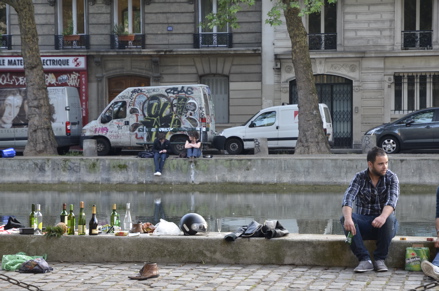
Quai Canal Saint Martin in Paris

You'd look away too if you just polished off all those bottles. Canal Saint Martin is a popular spot to hang out and drink in public in Paris. (Julia Pelish Photo)

PARIS — In the travel world it’s blasphemy to suggest Paris isn’t all that. For many people this is the most beautiful city in the world as well as the centre of all things great in cuisine and culture. After my recent stay and, having the fortune to visit some great cities in the past year or so, I found it fell short in some big ways. So, here goes: Five reasons why Paris isn’t as great as people say. [Write in with your disapproval – or agreement.]

Mediocre quality of service. In no other country do we excuse underwhelming performance as much as we do in France, particularly Paris. “Oh, it’s just the French,” is what so many people say when they’ve encountered a surly worker at a Metro information booth or a waiter who spends more time texting on his phone than refilling your water glass. You also run into shopkeepers who seem bothered that you spend a few minutes perusing their selections rather than ordering quickly and letting them go back to their game of Angry Birds. Of course, you’ve got some terrific service and hospitality workers. The Hotel Athenee, where I stayed for seven nights, was terrific and the staff were extremely friendly and helpful. Overall, though, the city’s service industry could use some shine.

The racism is boorish. Several expat Canadians who I met in Paris said the racism is so over the top it’s shocking. They tell me TV commentators are blatantly insulting to people of different races, especially blacks. Some say they end up having to back out of conversations that become too uncomfortable because of the racist language. Paris wants to be thought of as the epitome of cultural sophistication and civility, but you can’t do that when you still have the mentality of a 19th-century colonialist.

The Louvre is disappointing. As one patron of the Louvre told me, “You have an entire floor where you see one painting after another of the same thing painted by an Italian. It’s one version of Madonna and Child, next to another painting of Madonna and Child.” A little hyperbolic, but there’s some truth to the criticism. There is a sameness to some of the wings of the Louvre and there is also the annoyances: The crowds make you just want to get out of there; there aren’t enough washrooms; the food choices are few and they’re weak. And, yes, the Mona Lisa is a disappointment. That’s not to say seeing Winged Victory and the Venus de Milo isn’t a magnificent experience you must have for yourself. It’s just that as far as great museums go, the Hermitage in St. Petersburg and the Met in New York offer more satisfying visits than the Louvre.

READ PARIS TRAVEL TIPS

The food could be better. A lot of it’s really great. And you can get good food at all price points (more on that in a later article). The “but” here is this: There’s a sameness to the cuisine. You’re going to have difficulty finding great sushi or Indian or Chinese, and as a visitor that’s okay. You’re here to enjoy French food the way the French do it. In this era of globalization, though, there’s got to be some adaptability. It’s happening, but slowly (more on that later too). Of the meals I ate in Paris the best by far was a home-cooked one, made by my friend Anil Murthy. Delicious shrimp biryani, butter chicken with only a pinch of butter (he swears) and homemade raita. Anil’s a damn good cook, so the Paris restaurants shouldn’t be ashamed!

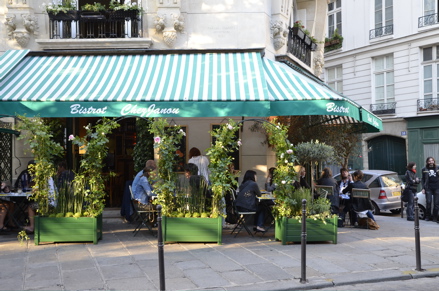
Chez Janou in Paris

Chez Janou is a popular spot in the Marais district of Paris. (Julia Pelish Photo)

The price. In terms of cost, Paris is like London: very expensive. You don’t realize how much so until you leave it. I broke up my stay in Paris with four days in Vienna, where I found the cost of everything from wine and food to clothes to be deeply discounted, in some cases at half the price as in Paris. For travelers, cost is always at the top of mind, and the premium you have to pay in Paris may make you want to look for an alternative.

read more »

May 12, 2011

In a battle of Vienna vs. Vancouver, both win

St. Stephen's CathedralVIENNA — Vienna or Vancouver? What’s the better city? They duel annually for the distinction of the world’s best metropolis to call home. Vienna this year topped the Mercer Index for Top Quality of Life while Vancouver was named The Economist’s Most Liveable City in the world.

I lived in Vancouver for five years (and intend to return to my home there one day) and I just got back from a four-day stay in Vienna. Picking a winner would be difficult. This is Ali vs. Fraser, or Halle vs. J-Lo, or Dom vs. Cristal.

Vancouver wins on scenery, hands-down. Vienna, from what I could tell, comes out on top in standard of living.

Vancouver is a little better on its overall food scene, but Vienna has Steirereck, one of the World’s 50 Best Restaurants. Vancouver has mountains, Vienna palaces. Vancouver has the Shangri-La, Vienna has the new Sofitel, with the hot Le Loft restaurant at the top. Vancouver has Stanley Park, Vienna has the historic village of Grinzig and the forest surrounding it. Vancouver has Granville Island, Vienna the Naschmarkt. And you can go on and on.

When it comes down to it, though, there’s a reason people find these two cities to be so terrific: The atmosphere. In Vancouver, you head to English Bay, Third Beach or the seawall on Coal Harbour and you instantly escape. Vienna relaxes you with its wide streets, friendly people and truly amazing modern art installations, many of which will make you to smile.

Of course, it also has more history than any North American city, with ruins dating to Roman times and churches as old as the 13th century. The art collection from the former Hapsburg empire is loaded with great works, including Vermeers, Rembrandts, Raphaels, van Goghs and Titians. There’s also Gustav Klimt’s “The Kiss,” a treasured painting that holds the viewer’s gaze with its beauty and intricate details. The 103-year-old painting is at Belvedere Palace, which boasts a number of other great works.

read more »

May 10, 2011

5 travel tips for getting around Paris

Walking in Paris

Hey, you're walking in Paris, don't look so serious! (Julia Pelish Photo)

Paris is one of those great big cities that can overwhelm as well as frustrate travelers. Having just gotten back from a nearly two-week stay, here are some of my travel tips that are fresh in mind. These ones are transportation-related (although the first one is a bit of stretch to fit that category) and I’ll have some others on here later in the week:

1. Don’t stop – Book your tickets to the Louvre online. On many days, you can stand two hours in line before you enter the world’s most visited museum. While the glass Pyramid and the Louvre’s courtyard are beautiful to look at, doing so for 120 minutes will make you as mad as van Gogh. Not many people are aware you don’t have to endure the wait. Sign up for an account with FNAC Spectacles and you’ll be able to order your tickets online (for the Louvre and other attractions). FNAC is a ticket seller like TicketMaster. You’ll have to pick up your tickets before you go to the Louvre. FNAC has locations throughout Paris, with one of the main ones standing across the street from Saint Lazare Station, about a 20-minute walk to the museum. The cost of a single ticket through FNAC is 11.60 euros, only 1.60 euros more than the regular admission price, and that’s a small charge to pay to avoid the massive queue. Take your pre-purchased ticket to the entrance beneath the arch of Pavilion Richelieu in the courtyard. You can also buy tickets to special exhibits online, but I’d advise against doing so. Once you get inside, the lineups aren’t long to purchase extras and you can do so at some automatic machines that don’t charge the premium that ticket resellers do.

2. Travel underground. Buy Metro tickets in bulk (12 euros will get you a book of 10) and study the system so you know the most efficient way to get where you want to go. Don’t discard your ticket once you’ve passed through the turnstile; at some stations you will need to re-use your ticket to either exit or connect to another train (which happens if you’re traveling on a line that services suburban areas as well as the city). If you do have to change trains to reach your destination, budget five minutes to get from platform to platform. The tunnel system is vast and the lines can be far apart from each other. Beware that some older trains don’t have doors that open automatically. You’ll either have to push a button or turn a handle to get on or out. The Metro has 16 lines and runs from 5:30 a.m. until 1:15 a.m. from Sunday to Thursday and until 2:15 a.m. on Friday and Saturday. A single ride costs 1.80 euros.

read more »

May 7, 2011

Paris travel tips from Canadians living abroad

The Marais area in Paris

The Marais is one of the areas Canadians living in Paris recommend you visit.

PARIS — Many Canadians are living the dream of spending extended time in the City of Light — some have even made it their permanent home. They offered me an insider’s view of Paris — from how to get the best meals at the best prices to what it’s really like to live here — and you’ll read about their thoughts on this site and in the Toronto Star’s Travel section in the next couple of months. For now, here are some of the best travel tips I received from those expats while spending time with some of them during this visit that I am wrapping up.

Food: The travel tip you’re most likely to take advantage of is this one from Dave Holmes: “When you go to a bistro, order the special of the day. You’re probably not going to go wrong. That’s what they’ve bought fresh that day and you can count on it being good.” Otherwise, he says, you might get something the restaurant has in the freezer that they just re-heat. Dave and his wife, Sarah, moved from Vancouver a couple of years ago and, being foodies, have enjoyed Parisian cuisine. They count a meal at Le Chateaubriand — recently named the top restaurant in France and the ninth best in the world by Restaurant Magazine — as their most memorable in Paris.

Gems you may not have heard of: Yvonne Martin, an interior designer from Toronto, introduced me to O’Neil, believed to be the first microbrewery in Paris. “Sometimes I just need a beer,” she says, and O’Neil serves four kinds — blonde, blanche, brune and amber. You’re sure to find one you like. The blanche was terrific. We didn’t try the food; Yvonne says it is only so-so. O’Neil is on the Left Bank, near the Latin Quarter. Other recommendations include the scene on Canal Saint Martin, walking Buttes-Chaumont Parc and living it up in the Marais. (More on those spots in the future.)

read more »

April 23, 2011

Canada Election 2011: Finding a true patriot in Kingston

Canadian-Pacific engine in Kingston, Ontario.

That's no ordinary train. It's Canadian history on view in Kingston. (Thanks to Julia Pelish Photography)

[This article about the Sir John A. Macdonald Walking Tour in Kingston was published in the April 23, 2011 edition of the Toronto Star. ]

KINGSTON, ONT. — Arthur Milnes’ hero is a long-dead tavern owner with a drinking problem, penchant for business dealings that end in scandal and a wicked wit. He’s also the father of our nation.

For Milnes, that’s a fact not celebrated nearly enough, especially in Sir John A. Macdonald’s hometown, this tony old city on Lake Ontario that was the country’s first capital. Since 2009, Milnes, a researcher on Brian Mulroney’s memoirs, has offered walking tours in Kingston of sites relevant to Macdonald. He carries a doll of Sir John A., which is a conversation starter for sure, and a passion for Canadian political history that anyone would find difficult to match. His dog, Mr. Pearson, is named after another beloved prime minister and his garden features trees planted by Paul Martin and John Turner.

Along with sharing his deep knowledge of political history, the Queen’s University fellow who specializes in researching prime ministers and U.S. presidents mixes in scintillating stories about our first leader and other politicians, both past and current.

With the nation subjected to yet another dismal election and with voter apathy at an all-time high, the tour proves refreshingly patriotic and reminds us we have a rich political history to cherish. Sitting in the Royal Tavern, which once belonged to Macdonald, Milnes says, “If we were in Virginia, in George Washington’s hometown, and we were in a bar that he owned, there would be tour buses lined up outside of this place.”

Instead, he and I are among only a handful of patrons in a tavern that could easily hold 200. The Royal is an old-time Canadian bar with round wooden tables, chairs seemingly made to encourage slouching and wall paneling that will remind you of some stationwagons from the ’70s. You can hear Robert Johnson on the jukebox, but other than that there’s not a whole lot of charm. It’s our history, though, and that’s something to drink to. There are some photos of Macdonald and the deed to the tavern showing his signature. No clear signs on Princess St. indicate the locale was once his possession. In fact, up until two years ago, there were no signs on the 401 demarking Kingston as the prime minister’s hometown.

sir-john-a-macdonald-monument

Sir John A. Macdonald stands tall in his hometown, Canada's first capital. (Julia took this one too)

Milnes lobbied for action on that front and two striking, blue-hued billboards — one in English, one in French — now appear as you near the city. A journalist and Scarborough native, Milnes also continues to push for more national recognition for Macdonald, including a bicentennial celebration of his birth.

read more »

April 18, 2011

Noma tops World’s 50 Best Restaurant Awards again — plus read my picks

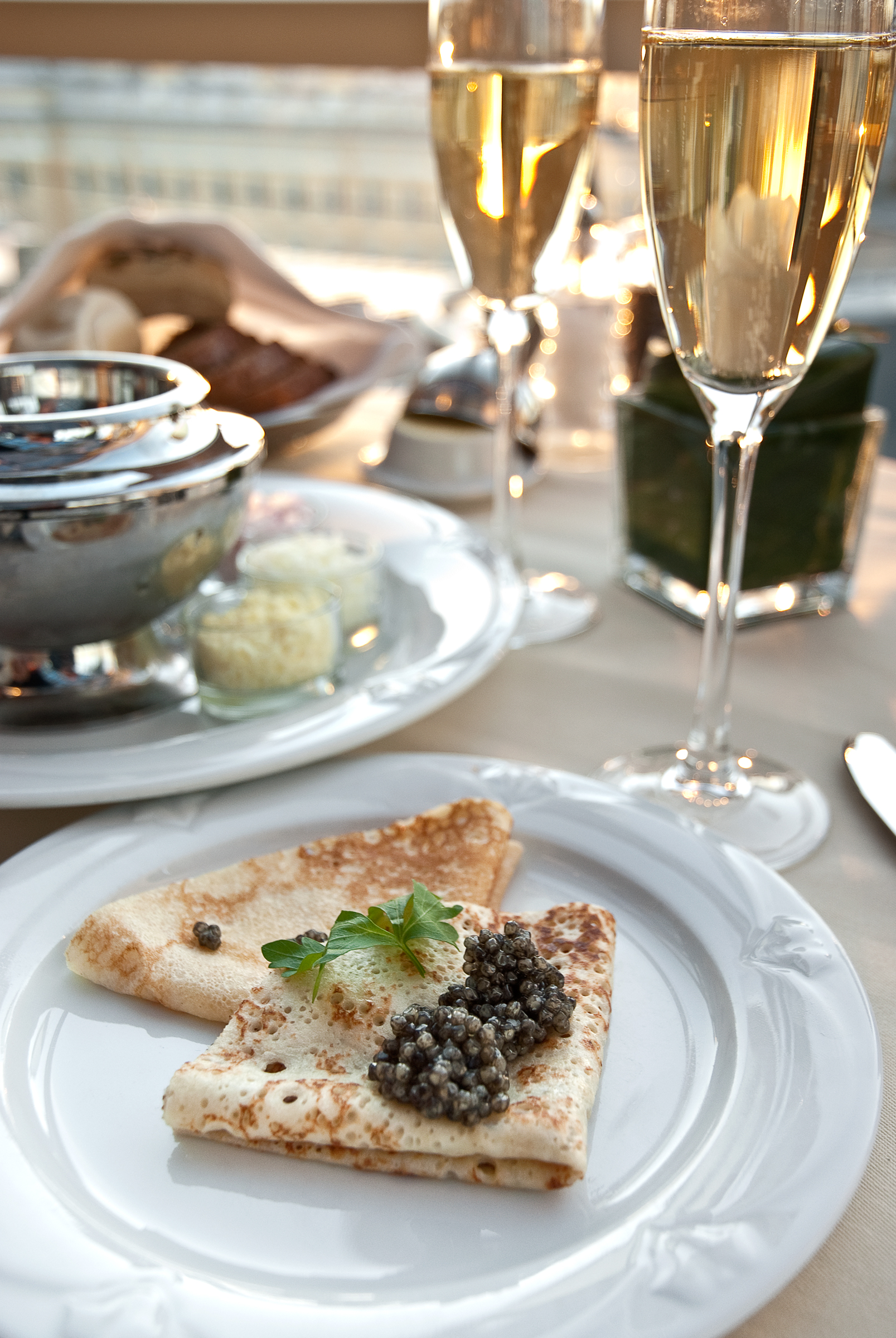
Bellevue Brasserie in St. Petersburg, Russia

Caviar and champagne at Bellevue Brasserie in St. Petersburg, Russia. The restaurant was one of my picks for the World's 50 Best.

[As published in the Toronto Star on April 18, 2011.]

Skim through the list of the world’s best restaurants and you won’t find one from Canada. No Langdon Hall, Rouge, West, North 44 or any favourites in Montreal or Vancouver Island. That’s not only discouraging for the chefs and restaurant owners here, it’s a shock to the man who’s been championing Canada’s culinary scene.

Steve Dolinsky, an acclaimed food reporter from Chicago, is the chairperson for the Mid-United States/Canada region of Restaurant Magazine’s World’s 50 Best judging academy. This year, Dolinsky made sure there were more Canadian-based judges than ever, which he thought would lead to more of this country’s restaurants making the grade. But the two establishments that scored positions on Restaurant Magazine’s World’s Best list last year — Rouge (60) in Calgary and Cambridge’s venerable Langdon Hall (77) — dropped out of the rankings for 2010. No Canadian restaurant has made the top 50 since 2003, when Michael Stadtländer’s Eiginsenn Farm from Singhampton placed 28th, a year after coming in the top 10.

“There’s no Canadian restaurant in the top 100 and that stuns me,” says Dolinsky, who was in London, England, where this year’s rankings were revealed at Guildhall on Monday. “With more judges from Canada than ever and with those judges being from all over the country, the only thing that I can think of is the votes were spread out. One restaurant may have gotten a vote here, another may have gotten two there, so things may not have been as concentrated as they were before. I’m really surprised there wasn’t more consensus.”

read more »

April 14, 2011

Hockey night in Israel

[There will be a lot of hockey news here in the coming weeks as the 2011 NHL playoffs begin. For now, here’s something on the international game. I had the great joy to visit northern Israel late last year and met up with some expat Canadians running the hockey league over there. The story and video ran on February 10, 2011 in the Toronto Star. Thanks again, Gerald!]

METULA, ISRAEL—If you think getting ice time is hard in the GTA, you should consider what Gerald Segal goes through to lace ’em up in Israel. Segal, a former Torontonian, drives 2.5 hours every second Thursday to the Lebanon border, site of the only hockey arena in Israel. That’s five hours of round-trip commuting time, or, as his brother in Toronto reminds him, longer than it takes most recreational players in Ontario to go to a rink, play a game, shower and get home.

read more »