Archive for ‘Travel Writing’

March 5, 2013

Atelier deserves all the praise it gets

[Vacay.ca is putting together its second annual list of Canada’s Top 50 Restaurants and public voting helps to determine that list. The voters have been incredibly supportive of Atelier, a wonderful restaurant with only 22 seats in an out-of-the-way neighbourhood in Ottawa. I had a chance to dine there and speak to its chef, the talented Marc Lepine. This article was published in Vacay.ca in October.]

OTTAWA, ONTARIO —  Midway through her dinner, Jennifer Swartz looked up to her dining partner and exclaimed, “Hands-down the best meal of my life.”

Swartz had been meaning to make reservations at Atelier for a number of months and wasn’t disappointed in her August visit despite entering Marc Lepine’s restaurant with lofty expectations. “You hear so much about this place in Ottawa but it’s still a little secret outside of the area,” said Swartz, who lives in Canada’s capital and was dining a couple of tables away from me. “The food is like art.”

And that’s not by accident. Lepine began Atelier in 2008 after completing a stage at Alinea, the Chicago restaurant run by Grant Achatz that’s consistently near the top of the annual World’s 50 Best Restaurants ListAlinea is known in North America for popularizing microgastronomy, the cooking technique that involves chemistry and often results in whimsical creations. Numerous chefs have tried to replicate Achatz’s success with microgastronomy and the results are often hit and miss. Lepine is one of those who is on the mark.

In February, Lepine’s team won the Gold Medal Plates competition at the Canadian Culinary Awards in Kelowna, British Columbia, and earlier this year Atelier was named the People’s Choice winner in theVacay.ca Top 50 Restaurants in Canada List, finishing fifth overall.

Knowing Atelier’s reputation, I approached my visit to the restaurant expecting an opulent room laden with crystals and 500-thread-count linen. Like its chef, though, Atelier is understated in every way but the boldness of its cuisine. The restaurant’s exterior on Rochester Street, six kilometres from the frenzy of the Byward Market, is so non-descript it doesn’t even have a sign. It’s a house, not a mansion. The exterior is slate grey and a black grate covers the window, making it seem almost moody when you approach in the night. But that’s not an indication of what’s inside. When you enter, host and sommelier Steve Robinson greets you warmly, inviting you into a 22-seat space that feels like a dinner party.

“It made sense that we didn’t have a sign, because our menu’s blind and we’re reservation-only, and this kind of works for us,” says Lepine, pointing out that Atelier isn’t the sort of place where people decide to go on the spur of the moment, so it wasn’t important to rent a storefront in a well-trafficked area of Ottawa.

People would come searching for the food, if it was good enough, he believed. As Swartz indicated, the word of mouth drew her in.

One of the most likeable chefs you’ll ever meet, Lepine puts his imaginative spin on dishes to make Atelier as creative a kitchen as you’ll find in the country. One of the plates on my visit featured 14 ingredients, another — an octopus salad — was so minimalist it was positioned to occupy only one corner of the white plate; hence its menu name, “In This Corner.”

That’s the other aspect of Atelier and Lepine you will remember: The imagination doesn’t stop with the food. Each dish has a name that attempts to be clever. A cold pea soup puree is called Give Peas a Chance (and you should, it’s delicious), a crab-and-lobster dish is named after characters in both the “Little Mermaid” (Sebastian the Crab) and “The Simpsons” (Pinchy the Lobster), and a peach dessert gets tagged with the title Impeachment. The servers appear chagrined and apologetic when they pronounce some of the names, which only adds to Atelier’s lack of pretentiousness. The music is all Canadian. Imagine dining on Idaho-raised wagyu beef prepared sous vide — meaning sealed in an airtight bag and cooked in water for several hours — while Joel Plaskett plays in the background. It’s not something you’d ever envision, and that ability to surprise and make you look at dining anew is partly what defines Atelier.
read more »

February 17, 2013

Chef Michael Smith shows Canadians how to cook

[This article was first published on Vacay.ca on January 10, 2013 and then syndicated on the Huffington Post Canada.]

HUNTSVILLE, ONTARIO — Michael Smith told me he has built a career out of reminding Canadians that cooking is about the people you share the meal with rather than the perfection of the recipe. He then went about showing what he meant.

In a wildly entertaining weekend at Deerhurst Resort, Smith held court and kitchen in the Muskoka property most famous for hosting Barack Obama, Stephen Harper and the rest of the G8 leaders during their 2010 summit. Smith didn’t have the security detail of those politicians, although he could have used one given the fact his contingent of female fans have a voracious appetite for him as well as his food. Clearly enjoying the attention, Smith hugged, kissed and signed autographs of his latest cookbook, Fast Flavours — 110 Simple Speedy Recipes, for the roughly 200 people who showed up to be in the presence of Canada’s most famous chef.

Standing 6-foot-7, Smith came across as a gentle and affable giant with a great deal of admiration for his adopted country. He was the head of food operations in the Athletes’ Village at the 2010 Winter Olympicsin Vancouver, turning out up to 12,000 plates a day for the competitors and delegates in a role he called the highlight of his career. Currently the only chef on the Food Network Canada with an instructional cooking program, “Chef Michael’s Kitchen,” Smith has lived in Prince Edward Island since immigrating from New York more than 20 years ago. He elevated the Inn at Bay Fortune on PEI to recognition as one of the nation’s finest restaurants before his cookbooks and television shows took off, rocketing him to stardom.

“I miss some aspects about being a chef in a restaurant, but I don’t miss the hours or the lifestyle,” Smith said, reiterating that he has no plans to open an eatery.

read more »

January 26, 2013

Diamond Rings takes on the world

[This article was published last month in Vacay.ca as part of its Rock ‘n Roll Road Trips series. Diamond Rings has since been nominated for a SiriusXM Canadian Indie Music Award, whose show takes place March 22, 2013 during Canadian Music Week in Toronto.]

Diamond rings, John O’Regan says, are glamorous and tough. That’s why they’re the namesake of his on-stage persona, an act that has busted out of the Toronto music scene to earn superlative-laden reviews across the continent. One reason for the success is the fact diamond rings are mesmerizing too.

It’s difficult not to keep your eyes on O’Regan. For one thing, you have to make up your mind whether his act is an artistic form of self-expression or a schtick. One listen of his hit “I’m Just Me” should convince you he’s much more Ziggy Stardustthan Gary Glitter, which is to say that Diamond Rings has substance and cred. It’s quite possible the persona O’Regan has created is the most interesting act to come out of Canada since Arcade Fire. “I’m Just Me” comes across as a mantra for the sexually uncertain, the androgynous or the transgender, but like any great song it has universality to it, appealing to anyone who embraces their individuality when it clashes with bullies or the sensibilities of the establishment. There’s both a rebelliousness and a sweetness to the song, underscoring the duality O’Regan talks about in himself and his performance.

While most audiences are now hearing about Diamond Rings for the first time, O’Regan isn’t an overnight success. He’s been toiling in Toronto for several years, fronting the electro-pop band The D’urbervilles, recently renamed Matters. In Toronto, the 27-year-old spends his days in Roncesvalles, a historic neighbourhood known for its Polish heritage and proximity to High Park.

“I tend not to leave that neighbourhood when I’m at home. Being away, being in a rock band there is so much stimulation, a lot of long nights, a lot of loud music and loud clubs, and although Toronto is great for all that stuff, when I’m home it’s rarely what I want to do,” O’Regan said during an interview three weeks ago in a suite in the Ritz-Carlton Toronto.

Roncesvalles is beyond West Queen West, an area that’s become a cultural hub for the city, with vintage clothing stores, nightclubs, and a pair of notable boutique hotels, the Gladstone and the Drake, that are a breeding ground for artists of all sorts. O’Regan’s part of town is much more low key, although it does have two of the city’s best new restaurants in Hopgood’s Foodliner and Barque. Despite his flamboyant stage presence, O’Regan struck me as very much an introspective artist devoted to pushing himself and his work as far as he can, and that makes Roncesvalles a fit for him. It lacks the bustle and distractions of other areas of the city, allowing him to hole up and make music.

read more »

January 5, 2013

10 tips on how to eat cheap on the road

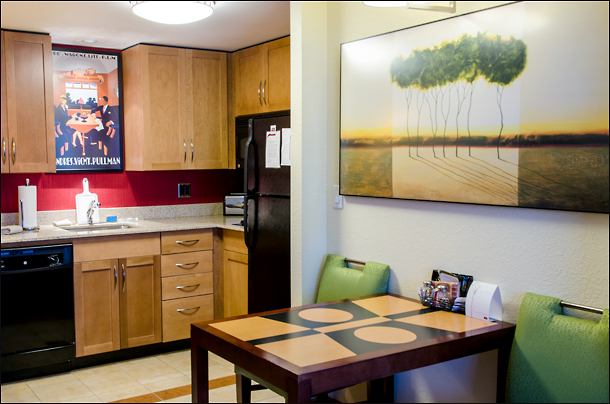
Many hotels, such as the Residence Inn in Kingston, Ontario, now have kitchens in their suites. (Julia Pelish/Vacay.ca)

Many hotels, such as the Residence Inn in Kingston, Ontario, now have kitchens in their suites. (Julia Pelish/Vacay.ca)

[These tips were originally published on Vacay.ca]

One of the most costly expenses when you vacation is food. It’s also one of the more difficult purchases for which to budget, even though many restaurant menus are now online to help you pre-plan what you will spend. What tends to happen is we end up becoming more picky about where we eat on the road because we want it to satisfy our hunger both for food and for experience. Will the food be worth it? is a question that takes on greater importance when you only have a few days in a place. How do I stretch my budget and experience the best of local culture? is another question many travellers ask.

Here are tips on how to save on your food budget when you travel, while maintaining your desire for an enjoyable visit.

1. Know your hotel choice. Book a hotel that includes breakfast and pre-pay for the stay, which will reduce your accommodations cost by at least 5 per cent at most lodgings. Hotel breakfasts can often be overpriced but a cost reduction through pre-payment is beneficial for more than just your pocketbook. It saves you time — eliminating a decision on where to eat in the morning — and gives you some peace of mind because you will have paid for this cost before you arrive.

2. Sleep with a kitchen. Better than paying for breakfast (or lunch or dinner) is having the ability to cook it yourself. More and more hotels are providing their own kitchens, a feature that many timeshare owners have long enjoyed. The benefit of having a kitchen — or at least a microwave and fridge — is it gives you the option to further control your food costs. A trip to the grocery store soon after check-in will give you a stockpile of choices for late-night snacks or an all-out gourmet feast if you choose. EXTRA TIP: Pack a few teaspoons of your favourite spices in spice containers made specifically for travelling. You’ll find them in the kitchenware department of many retail stores. It’ll save you from buying full containers of spices once you arrive at your destination.

3. Eat meals prepared at grocery stores. Even if you don’t have a kitchen in your room, you should still go to the grocery store. Some of the best cheap meals you’ll find in any North American city are in the prepared food areas of supermarkets. Whether it’s Whole Foods in New York, Rouses or Langenstein’s in New Orleans, or even Longo’s in Toronto (where a gourmet 10-inch pizza can be had for less than $7), you can find outstanding, freshly prepared food that won’t break your budget. You also won’t need to tip or wait for a table. Although some health experts will tell you that grocery stores tend to cook their prepared meals with meat and fish products that aren’t the freshest in stock, you’re still more likely to get a healthier meal from a grocer than from a fast-food restaurant.

4. Visit the local farmers’ market. Farmers’ markets are booming across North America thanks to the locavore movement and the desire for environmentally friendly community building. The markets offer both a travel experience — because you will find out a lot about a city’s culture through the people who cultivate and consume its local produce — and a fun dining experience as you sample bits and bites from different vendors, many of whom offer samples. Canada is extremely lucky to have thriving farmers’ markets across the country, particularly in Ontario.

5. Adjust your Groupon deals account. Those online coupon companies that just about all of us take advantage of when we’re at home can come in handy on the road too. Adjust your Groupon or Living Social account to show deals in the destination you’re visiting and you’ll find discounts on restaurants, as well as some attractions.

read more »

January 1, 2013

Why Louisbourg is the best place to see in Canada in 2013

fortress-louisbourg-cape-breton

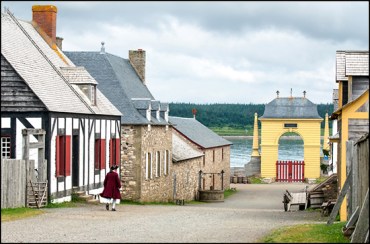
Fortress Louisbourg celebrates its 300th anniversary in 2013. (Julia Pelish photo)

LOUISBOURG, CAPE BRETON, NOVA SCOTIA — No lawyers were allowed in colonial Louisbourg. Louis XIV wanted to build a utopia on this side of the Atlantic and anyone who was out to practice law could only undermine that dream, the Sun King thought. So rules were enforced by the governor of Île-Royale and an appointed council. But lawyers? They were left to eat cake — or learn to bake it.

Today, Louisbourg still exhibits the spirit and mindset of its founders. Set in 1744, toward the end of French rule of the territory on Cape Breton, the recreated historic village replicates life as it was for the blacksmiths, tavern owners, military personnel, government officials and citizens in the 18th century. To enter the fortified city, visitors must first pass through a gate defended by militia who will test whether you’re a British spy or ne’er-do-well before allowing you to enter. Thoroughly fascinating, Louisbourg is so well done as an attraction you almost lose sight of the beauty of its setting. Almost.

Cape Breton’s natural allure never quite relinquishes its grip and the scenery surrounding Louisbourg is reminiscent of the French coast, with a torrent of waves and swatches of thick, golden reeds that from certain angles appear to mask the fortress as you approach.

“Louisbourg is the jewel of the national parks system,” says Linda Kennedy, who runs Point of View Suites, a sensational property just outside of the entrance to the historic site.

For those who have been to colonial Williamsburg in Virginia, Fortress Louisbourg will seem familiar. But it is much more of a living museum than a commercial enterprise, although you can purchase meals and pay to take part in a murder mystery tour or night-time lantern walk.

In 2013, Louisbourg celebrates its 300th anniversary and will do so with panache, earning it the distinction as the No. 1 place in Canada to visit in 2013 from Vacay.ca.

The Louisbourg300 festivities feature a month-long fête with additional music, cultural attractions and a harbourside market in July. A series of other events and celebrations will take place during the summer, including a much-anticipated regatta on the waters surrounding the fortress. As Louisbourg heralds its tricentennial, it gives Canadians an opportunity to reflect on how important of a place it is to the nation’s history.

“Louisbourg in some ways is a microcosm of what Canada eventually developed into, which is a multicultural, multilingual society,” says Barbara Landry, one of the Parks Canada officers at the fortress.

read more »

December 29, 2012

Best of Canadian Travel in 2012

calgary-stampede-rodeo

The rodeo is only part of the excitement at the Calgary Stampede. (Julia Pelish photo)

[This article was previously published in Vacay.ca and the Huffington Post in December 2012.]

Jenna Skinner and Adam Carmichael reminded me of something I’ve known for a few years now: Travelling the world is great in part because it puts into context Canada and what makes it an amazing country. I met Skinner and Carmichael at Quidi Vidi Brewery, one of those Canadian finds few people outside of its region ever hears about.

Newlyweds in their early 20s, Skinner and Carmichael were spending their last days of summer travelling the nation’s east coast, doing what Canadians have done for decades — hitting the open road with gas in the tank and camping gear in the back. They left from Sauble Beach, a picturesque spot in Ontario that’s three hours northwest of Toronto. Heading east, they drove all the way to the edge of the continent. Gros Morne National Park struck them for its beauty, while Newfoundland as a whole earned praise for its welcoming spirit.

“It’s so different from Ontario,” Skinner said. “Canada is so big that you forget how unique different parts of it are.”

Both Skinner and Carmichael have travelled abroad extensively, which is a prerequisite, I think, for truly understanding what a remarkable nation we have here.

“We’ve been to other places and you learn to appreciate Canada. My priority now is to see Canada first,” Carmichael said.

Like the newlyweds, I spent the summer on the road, touching down in nine of the 10 provinces (see you in 2013, Manitoba). My impression is Canada is changing, fast. The wealth in Alberta and Saskatchewan is giving cities like Calgary and Saskatoon the chance to re-invent themselves, and thanks to artists, chefs, visionary politicians and proud communities, they’re doing it. The buzz in the west is palpable. In many ways, those provinces are the engine that’s driving the nation’s future. Meanwhile, Newfoundland has struck oil and St. John’s is thriving because of it. Unemployment is still high in other parts of the province, but the capital is enjoying some of its best times in its history, and that makes it a reason to go because even in lean times St. John’s is as fun a city as there is in the country.

Tourism opportunities abound in big centres and small, with people eager to search out local experiences, whether it be culinary finds or historic tours that are short on gimmicks and strong on depth and personality.

In all, 2012 was a fantastic year for seeing Canada. The 100th Calgary Stampede was a highlight, along with many other one-of-a-kind encounters.

My Best of 2012 in Canadian Travel

I’m glad I discovered …: Saskatchewan. And you will be too, when you drive up to Lake Waskesiu or grab a pint at the Bushwakker Brewpub in Regina or stroll along the river in Saskatoon. Canada’s most underrated province is truly a gem waiting to be discovered.

Three meals of a lifetime (naming just one is too hard): Langdon Hall, where chef Jonathan Gushue and his outstanding kitchen went all-out with an 11-course menu that included a cut of venison that might make a vegetarian think twice;Rouge in Calgary is immaculate, warm and downright perfect in so many ways; and Atelier in Ottawa, where chef Marc Lepine is letting his imagination run wild and winding up with some of the most unique dishes you’ll find in the country. (Naming only three is hard too — so, go to Les 400 Coups in Montreal for a sublime dining experience.)

Best gourmet meal I didn’t expect: The Willow on Wascana in Regina, Saskatchewan. Chef Tim Davies is doing many things right in his kitchen.

Best cheap meal that’s not a food truck: The Calgary Sandwich ($14) at the Galaxie Diner.

Best cheap meal from a food truck: The Bangkok Slaw from chef Adrian Niman and the Food Dudes in Toronto. (Runner-up: Sloppy Jose sandwich from Matt Basile of Fidel Gastro in Toronto.)

Best pizza: It’s still Nicli Antica Pizzeria in Vancouver. Even better than the first time.

Dish I can’t wait to try again: Former Black Hoof chef Grant van Gameren’s Blood Pudding and White Chocolate, which I had a taste of at the Roots, Rants & Roars food festival in Elliston, Newfoundland & Labrador. Weird and classy, silky and rich, sweet and potent, it is a dichotomy of a dish and also an absolute treat. Van Gameren is opening a restaurant soon in Toronto’s Little Italy and this item should be on the menu for all to try.

Best hotel suite: The Osprey Room at the Beach House in Portugal Cove, just north of St. John’s. The Osprey Room is 850 square feet of opulence with floor-to-ceiling windows looking out into the jaw-dropping cove. Simply stunning.

read more »

December 6, 2012

Rugged Beauty tour is rock solid in Newfoundland

[This article was first published on Vacay.ca on November 28, 2012]

NEW BONAVENTURE, NEWFOUNDLAND & LABRADOR — Meet Bruce Miller.

He lives here, in the land of his father and grandfather, a remote swath of territory with enough arable acreage, clean air, pristine water, and wildlife to inspire poetry and instill a will to depart only upon a last breath. A thoughtful Canadian, Miller flies the flag of Newfoundland outside his home, a small cabin overlooking British Harbour and Trinity Bay at the edge of the continent. In an island of Baymen and Townies, Miller is Bayman to the core, with a lilt in his brogue and a ready wink to go with his easy smile. He makes a meagre living as a fisherman and labourer and augments his income operating one of the most unique and riveting tours in Canada, taking visitors to communities affected by Newfoundland’s controversial resettlement. The itinerary includes a stop in his own home, for a cup of tea.

“It’s the history that people seem to love,” Miller says on a wet day in September. He flips through picture books that show boats from a half-century ago trawling homes in a mass exodus that you would think only happens because of disaster or a plague. Among the photographs are some of Miller’s parents, who chose not to follow.

“This is home. You can’t replace that. The government can’t replace that,” he says. “These days, it’s becoming harder and harder to stay. You have to be real creative to make a living here.”

read more »

September 11, 2012

Charlottetown’s big-city appeal

holman-grand-hotel-penthouse-charlottetown

The penthouse suite of the Holman Grand Hotel offers wonderful views of the city and harbour. (Julia Pelish/Vacay.ca)

[I had the chance to visit beautiful Prince Edward Island last month and this story on the provincial capital was published in Vacay.ca in August 2012.]

CHARLOTTETOWN, PRINCE EDWARD ISLAND — Charlottetown is so immaculate it needed to invent its own mice population. Three years ago, miniature bronze mice began to appear throughout the downtown streets of this tidy provincial capital. Part of a scavenger hunt based on the character Eckhart the Mouse from author David Weale’s “The True Meaning of Crumbfest,” the mice are another cute aspect of a city that’s easy to adore for all of the reasons you might expect — Charlottetown is as friendly and attractive as its reputation — and for some reasons that will surprise you. Despite a population of less than 35,000, Charlottetown has a surprisingly upscale dining scene and lively bar atmosphere.

Victoria Row, a pedestrian-only block of Richmond Street that’s bracketed by iron gates on either end, is home to patio bars and a summertime stage that features local musicians performing during the day. You can hear the music, which is often very good, from blocks away, creating a festive atmosphere in a downtown core that might otherwise seem sleepy on first encounter.

A few blocks from Victoria Row is Lot 30, an outstanding eatery headed by chef Gordon Bailey (formerly of the Inn at Bay Fortune, PEI’s only entry in the 2012 Top 50 Restaurants in Canada list). The Lot 30 menu changes daily, although you can expect lots of seafood choices and an excellent steak. It fits perfectly with the generation of modern restaurants that emphasizes flavours from natural, local ingredients rather than thick, heavy sauces. Not surprisingly, the succulent scallops were a highlight of a recent five-course tasting menu that also included baked scallops and a dessert trio with luscious Bailey’s ice cream and chocolate mousse. Just as impressive is the quality of service, which is decidedly big city in its professionalism, a contrast to many other parts of Atlantic Canada where wait staffs tend to be friendly and polite but below-par in performance.

read more »